
We all have books we can’t put down. We all have books we’ve abandoned after 50 pages. And most of us have wondered, at some point: Who decides which books actually get published?
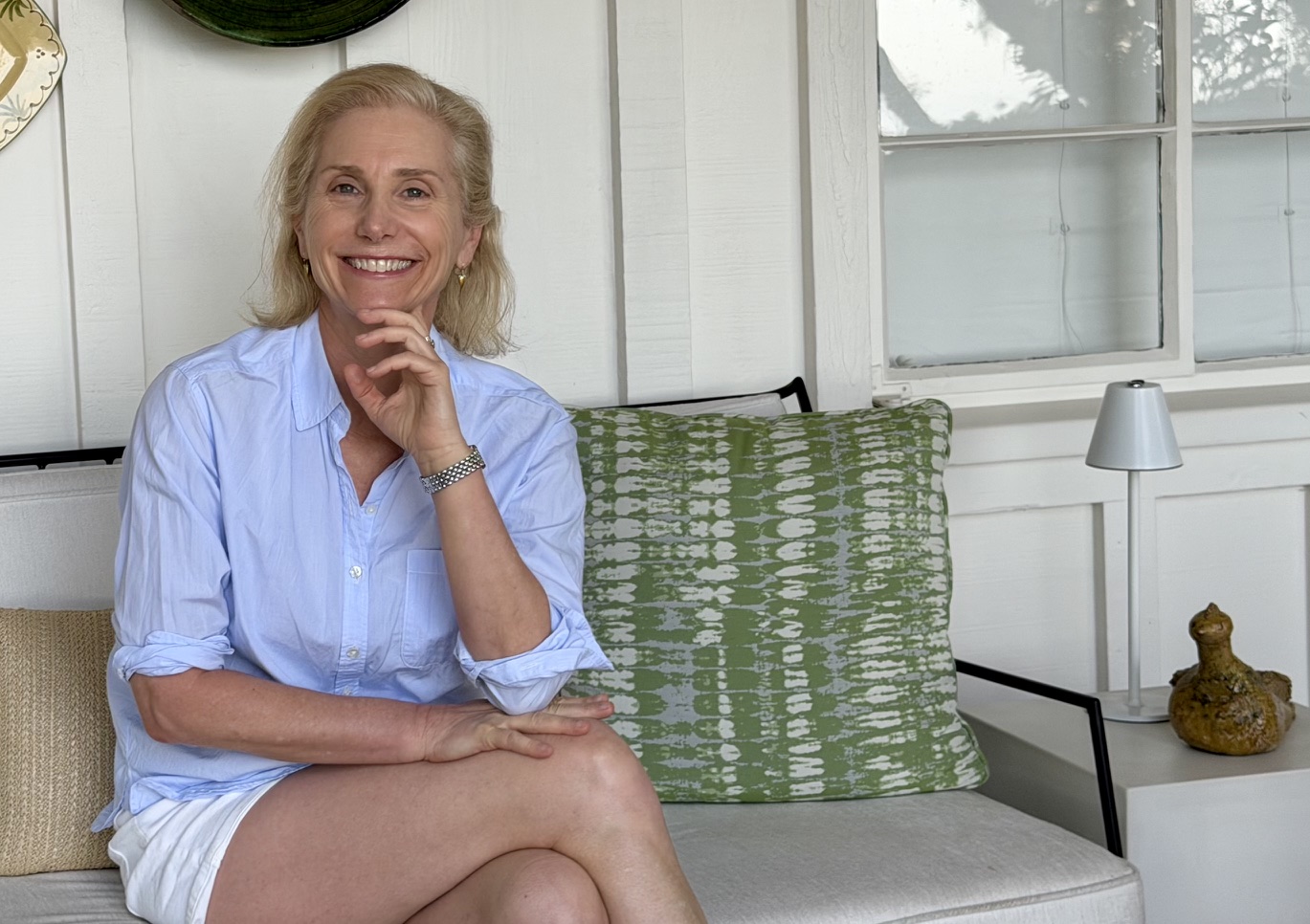
To find out, FabList sat down with literary agent Jane Hamilton, who represents fiction, nonfiction, children’s books, and YA. We asked her to walk us through her career path and tell us what it takes to get a book from an idea to the bookstore shelf.
Jane’s path to becoming an agent was anything but straightforward. In fact, it took her from art history to London to Rizzoli, to interior design, to raising children—and eventually back to the career she always wanted.
Here’s what she told us about finding great books, working with authors, negotiating publishing deals, and what makes a book a bestseller. And don’t miss her recommended 5 top recent reads!

Jane’s Path to Becoming a Literary Agent
Did you always know you wanted to become a literary agent?
Coincidentally, I grew up with literary agents on both sides of my family. My grandfather on my father’s side represented authors like Pat Conroy and John Fowles, and my uncle on my mother’s side represented Jon Krakauer and Stephen Ambrose.
Deep down I always knew I wanted to be an agent. I remember going to lunch with both of them separately and hearing about what they were working on, and I just knew being an agent combined all the things I loved to do. I love editing, learning about different topics, and championing talented writers.
I remember when my grandfather was working with Pat Conroy on one of his books, and he would ask me what title I would pick. I loved being able to guide a writer while also considering what is commercial and what will sell.
But you studied art history rather than English.
I have a strong visual side, and I thought I could satisfy my love for art and editorializing with a job that let me research, curate, or sell art after college. I didn’t know if this meant working on art books, writing for magazines, or being a curator.
After Barnard, I lived in London for about six months and interviewed art collectors for Sotheby’s magazine. When I came back to New York, I got a job at Rizzoli editing art books.
I worked with the Frank Lloyd Wright Foundation and the Andy Warhol Foundation, as well as other famous artists and major art scholars. It was a great job.
And then you took another turn and became an interior designer?
Yes. I went to get my master’s in art history because I thought this would help me get ahead in the art book publishing world. While I was getting my master’s, I started taking design classes for fun, and I ended up leaving my master’s and enrolling at FIT (The Fashion Institute of Technology in New York) for interior design.
I loved being able to make creative decisions that would impact someone’s life, and I was an interior designer for many years. I worked for many different people, had great jobs in the interior design world, and ran my own company for a while. During this time, I also got married, moved to Los Angeles, and had two children.
So how did you find your way back to books?
My uncle, the literary agent, died in 2014, and I went to his home to clean it out with my mother. As I was looking through his desk with all his files and book contracts, I got this feeling of excitement and remembered: Oh, my God. I really had always wanted to be a literary agent. That’s what I truly wanted to be doing. And I had strayed from that dream.
I thought, I need to be doing this now. And if I don’t do it now, I will never do it.
And then you happened to meet a literary agent at a party?
Yes! Immediately when I returned to LA, I was at a party and sat next to the agent, Michelle Zeitlin. We started talking, and I said, “I’ve been an editor, and I really want to start representing writers.”
She said, “Well, come work for me.”
So I started working with her in her nonfiction department, which eventually led to other genres.
We took on a children’s book that has now become a modern classic, The Invisible String by Patrice Karst. We sold a four-book deal to Hachette, and that book has now sold more than two million copies and continues to be one of Amazon’s top sellers.
Eventually, you went out on your own?
Yes. We parted ways, and I went off on my own. Ever since then, I’ve had my own clients. I work with nonfiction, fiction, children’s, and YA authors.
So What Does a Literary Agent Actually Do?
Let’s say you’re an aspiring author. Where does the agent come in?
A Literary Agent helps authors sell their work to a publisher. They prepare the manuscript for submission, help the author build their public persona, help choose illustrations, and use their contacts in the publishing world to get their work in front of the right people. They negotiate on the author’s behalf when the deal comes through, and they work to get the most money for the book.
Once you have written your book, you then submit it to an agent via email. If you look at the agent’s individual websites, they will tell you what materials they want to see. It might be 1-3 chapters for fiction or a proposal for nonfiction. If it’s a children’s book, I like to see 1-3 illustrations and the text.
The agent will then decide if they want to represent you. If so, they will submit the manuscript and pitch to several acquiring editors with the goal of selling your work. They will then negotiate on your behalf if there is interest from a publisher. Literary Agents typically receive a 15% commission of all monies the author receives. This includes advances, royalties, foreign editions, electronic editions (Kindle), and Audible versions.
What are you looking for in those first 20 pages submitted?
You only have a few minutes of the agent’s attention, so those first 20 pages better be captivating! I’m looking for a unique writing style, POV, or voice, and a storyline that transports you to a time and place.
I want to see a world or atmosphere that the writer has created. And I’m not talking about Sci-fi LOL! Does the work have a fresh take on the subject that we haven’t read before?
Do you notice trends in the manuscripts that come across your desk?
Yes, the trend selling now is women’s fiction and women’s stories.
I feel we need more books about women our age—empty nesters rediscovering what they want in the next chapter of their lives.
Once you find something you like, what happens next?
I’ll do a phone call with the author to find out their background. Have they published before? Have they used a literary agent before? Has this been professionally edited? Are they flexible about editing? How open are they to making changes?
If it’s a children’s book, I’m looking for great illustrations, and I like to see about 1-3 illustrations submitted for the pitch to publishers.
Some people say you don’t need an illustrator to get a children’s book published, but I like to work with the full book. I like text and great illustrations. I will work with the writer to edit the illustrations.
For fiction and nonfiction, we will then work on the manuscript together, fine-tuning it. This may involve doing a deep edit or just doing some light tweaking. Nonfiction calls for a proposal, and we will go over that and discuss the writer’s platform, comps, and marketability as well. I like to include 2 chapters with the nonfiction proposals.
I will then prepare the pitch and get in touch with the editors I think would be interested in acquiring your book.
Are you an editor as well as an agent?
Yes. I love editing.
And you don’t charge an author for editing?
No. Literary agents don’t charge for editing. Having said that, I expect the manuscript to be in good shape by the time it’s submitted to me. I don’t mind making a few changes here and there, but I don’t want to do a line-by-line edit.
Selling the Book
Once you have a manuscript you’re excited about, how do you sell it?
I put together a pitch that includes the author’s bio and a blurb about the book. I like to see what other comps are out there in the same genre. I sell the idea to the publisher, telling them why we need this book now.
How many publishers might you approach?
I’m really thorough. It could be up to 20 to 40 publishers, depending on the genre of the book.
I’ll do an A round, a B round, and a C round. Maybe the A round is the top publishers, then the B round is a smaller group, and the C round might be really small independents if we’re not getting anywhere.
How important are your relationships with editors?
It’s a lot about relationships. I have to know which editors like what, who’s reading what, and what’s on their wish lists. It’s a bit like matchmaking.
What happens when a publisher says, “We want it”?
They’ll give you an offer, and then the negotiating happens. That’s the fun part.
Hopefully the author receives a juicy advance and royalty package!
There are also foreign rights. Six months down the road, you might hear, “Italy just bought the rights to your book.” Then there might be a French edition or Chinese edition. That’s always great because the writer gets more money coming in because the foreign publisher is paying for the rights.
The Surprisingly Slow World of Publishing
Once you have a deal, how long before the book comes out?
About a year. Publishing is very slow.
If it comes out in hardcover, it’s a year, and then another year in softcover. The audio version may be released after the book is released, or simultaneously.
What happens during that year?
The author will meet with the publicity team, who will share how they plan to publicize the book. But these days, the author is expected to publicize their own book. That’s really hard for some people.
You’ve got to go on BookTok and Instagram and really get out there. A lot of authors aren’t publicity people. They’re not people who want to be in the spotlight.
The big publishers do have publicity departments, but it’s not like the old days. You’re not necessarily going on a book tour or being flown all around unless you’ve written a bestseller.
You can hire a publicity agent, but that’s going to start around $12,000, and that’s on the cheap side.
So how important is an author’s social-media following?
Very important, especially in nonfiction.
When I sell nonfiction, that’s the first thing I’m looking for. How many followers do they have on YouTube and Instagram? Are they an authority in their field with a following?
What Makes a Bestseller?
Is it the writing, the publicity, the subject—or luck?
Sadly, a lot has to do with PR and how much the writer is willing to hustle for their book.
So can publicity actually create popularity?
Yes, publicity works.
And then, if the writing is really great, that’s good too.
There are also surprise books that just take off. Those are rare stories that just catch on.
How many copies does a book need to sell to be considered successful?
About 3,000 copies.
Does the author have a say in the cover art?
Yes. The author definitely gets input on the cover. The publisher has the final say, but most publishers are very accommodating to the author.
The sales team also has a say in the artwork. And there are definitely formulas. There’s the romantic look. There’s the beach-read look. There’s a look for each genre. My client Melissa Clark’s recent YA book, Force of Nature, has a fabulous Japanese, manga-looking cover. It’s very eye-catching. When you see it, you just have to pick it up!
What about the title?
A publisher’s sales team can have a big influence. They know what titles sell.
What about bookstores?
Even Barnes & Noble is becoming more selective.
They used to be almost guaranteed to take your book, but they’re being even more selective now. A lot of books that normally would have been there aren’t.
Independent bookstores are still really important, though.
What does an author have to do to promote a book?
A lot.
In many cases, authors are now expected to arrange their own readings and signings.
They can have the bookstore order the books, or they can order the books themselves and sell them. Authors must be relentless machines to get the word out about their books. They must go on Instagram, BookTok, and YouTube.
What About Audiobooks, Kindle, and Movies?
Do most books become audiobooks?
A lot of books do, but not all.
Sometimes the author can be paid to read the book themselves. It depends on what kind of book it is. Otherwise, the publisher will find a separate company to make the audiobook and select the actor who will read it. The author gets an advance and royalties for the audiobook as well.
And what about movie or TV rights?
That’s the dream. Everybody loves to see a movie come out of their book.
It’s up to the author to decide whether to keep their dramatic rights so they can resell them later or give them to the publisher as part of their book deal.
The Part Most People Don’t Know About: Ghostwriters
How much does it cost to hire a ghostwriter?
It varies enormously. You could spend anywhere from $30,000 to $150,000. The ghostwriter is usually a work-for-hire. They don’t receive royalties, nor are they mentioned on the cover of the book, unless you negotiate that with them.
For nonfiction, they will write the proposal and maybe two chapters. If the publisher likes it, the ghostwriter will then write the whole book.
You would be surprised how many of your favorite books have been written by a ghostwriter!
Are ghostwriters mostly for celebrities?
No. It can be for anybody. If you’ve got the cash, you can hire anyone. There are agencies that represent ghostwriters.
What’s interesting is that the more well-known the ghostwriter is, the more likely the publisher is going to buy your book because these ghostwriters are celebrities in their own right. They’re top sellers.
Other Facts About Writers
How long does it take most authors to write a book?
All different. I hear ten years a lot. However, some writers are professionals and just crank them out.
Do most of your authors have other jobs?
It’s all over the map.
Currently I’m working with a few film writers. Hollywood is changing now, so I have screenwriters who are transitioning to book writers.
Do writers draw on their own life experiences?
Sure. Ideas can come from anywhere. I recently gave a client a New York Times article I thought she would be interested in, and now she is writing a book based on the article.
Jane’s Take on the Future of Books
Do you feel books are becoming more or less popular?
BookTok has really helped book sales. Bookstores are also getting so appealing.
But I still worry about the industry because of everyone’s lessening attention spans. And then AI is a problem.
What do you think about AI-written books?
It’s a big problem.
I won’t work with writers who use AI. The book loses that special quality of a writer’s touch.
So, After All These Years, Do You Still Love Being an Agent?
Yes, I still enjoy what I do. I love working with my authors and learning about different worlds.
When it comes down to it, I get tremendous satisfaction out of championing talented people and helping them get their ideas out into the world.
We asked Jane to provide 5 books she’s read recently and loves!
Jane’s Fab Five Recent Reads
My list is an eclectic mix of current and old books. I love autobiographies, biographies, and quirky, creatively written fiction, especially women’s stories and classics. I get my recommendations from FabList, The New York Times Book Review, BookTok, and I love picking up old paperbacks at vacation rentals.
1. The Many Lives of Mama Love by Lara Love Hardin: This book opened my eyes to what women, ex-prisoners, go through when they are released from prison and how hard it is to start a new life. It’s an inspiring story with a surprise ending!
2. Margo’s Got Money Troubles by Rufi Thorpe: I love how quirky the writing and characters are. The style was simplistic, yet this book is layered and sophisticated. It was a really fun read!
3. A Gentleman in Moscow by Amor Towles: All-time favorite! I learned so much about Russian history, and the writing is like fine pastry. Each page is delicately and richly written. A gorgeous story!
4. Wild Thing by Sue Prideaux: I love Art History, and I was so interested to learn about Paul Gauguin. The author did a great job of contextualizing this complicated and controversial artist.
5. How to Say Babylon by Safiya Sinclair: This book was recommended by Elizabeth Gilbert on Instagram, and it was so interesting and beautifully written! I learned about Jamaica and the rastafarian culture. The story is gripping and so poignant. Really Great! I listened to and read the book. The author is a poet, and her voice was beautiful.
THANKS JANE!

Want to become Jane’s client?
Jane is open to submissions, particularly from writers working in fiction, nonfiction, children’s books, and YA. She’s particularly interested in Women’s stories across all genres.
You can find more info about Jane and the submission process here.
